← Elevate Aura  ·  Aura Business, the operations platform Chennai, India · WhatsApp
For dealers whose contracts promise response times

SLA management software that runs a clock on every call, per contract.

Aura Business stores the response and resolution times you promised in each AMC or CMC, starts a clock the moment a call is logged, flags calls heading for breach so somebody can act, and keeps the record you need at renewal.

Response and resolution targets per contractLive clock and breach flagsSLA evidence at renewal time
app.elevateaura.co.in/service/sla
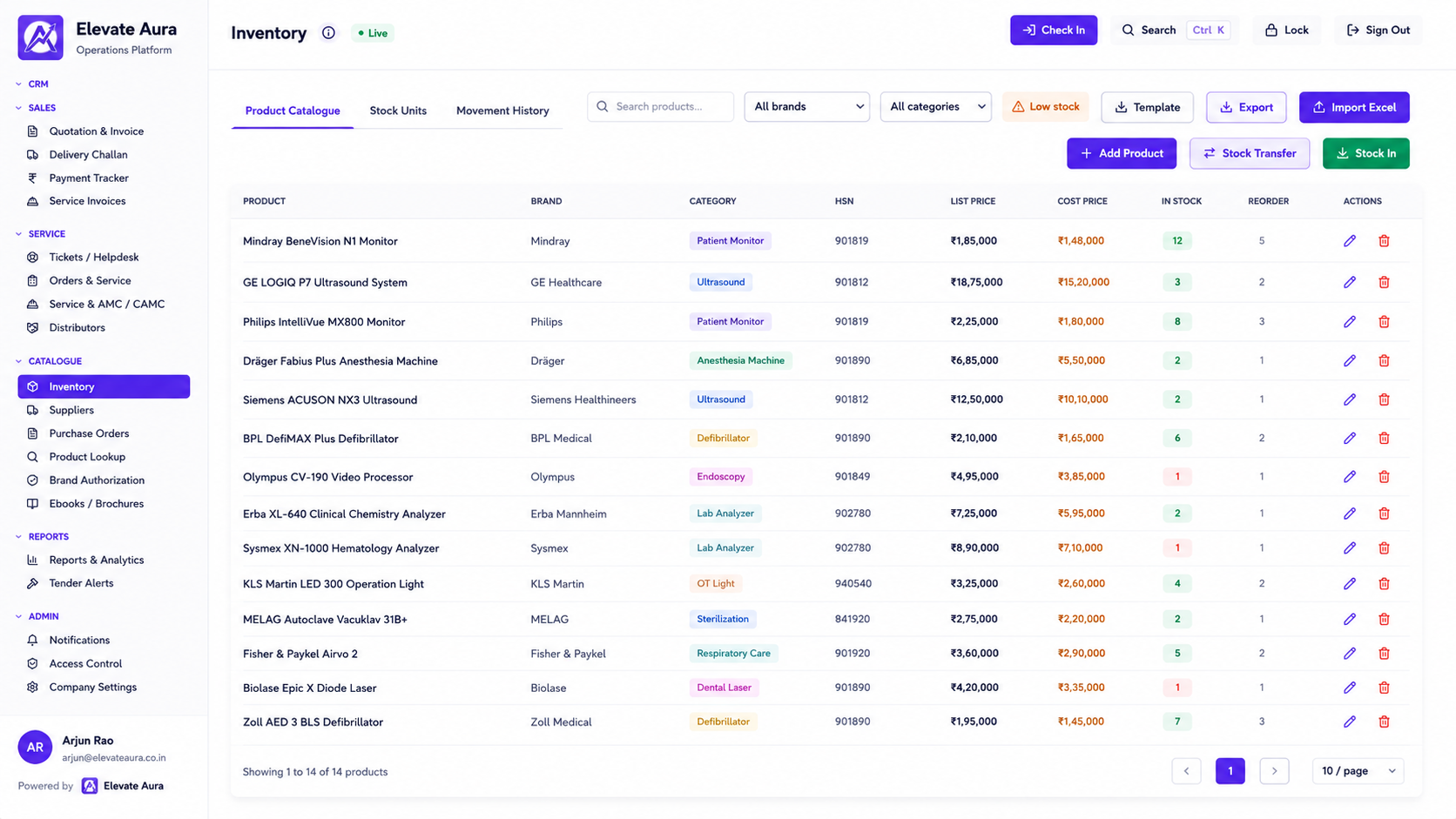
Aura Business service screen showing open calls with SLA response clocks and breach warnings per contract
In one sentence

What an SLA becomes once it is in software

A service level agreement is a promise with a number in it: attend within so many hours, restore within so many more. SLA management software turns that promise into something the service desk can see. Each contract carries its own response and resolution targets, every call logged against a covered asset starts a clock, and calls approaching their limit are visible before they breach rather than after.

Aura Business holds this as SLA Definitions and Breach Tracking in the AMC and Service Contracts suite, with SLA timers also running on helpdesk tickets. It is one of the few modules whose value is entirely about timing. A breach found the next morning is a report. A call flagged at hour three is a save.

Why SLAs are breached

Most breaches are not capacity problems. They are visibility problems.

Nobody decides to miss a response time. The call simply sits in a queue where nothing indicates it is different from the others.

Different promises, one queue

A four-hour contract and a next-day contract sit in the same list looking identical.

The clock exists only in the contract

The response time is in a PDF nobody on the service desk has read.

Breach discovered by the customer

The first anyone hears of it is an angry call from the hospital's biomedical head.

No escalation path

A call heading for breach is nobody's problem until it becomes everybody's problem.

Penalties argued without data

The customer claims repeated breaches and you cannot show your side of the record.

Renewals negotiated on feeling

You cannot demonstrate that you met the terms, so the renewal price is pushed down.

How the clock works

From the SLA definition to the renewal conversation.

01

SLA defined

Response and resolution times recorded on the contract, per priority where they differ.

→
02

Call logged

A breakdown against a covered asset picks up that contract's targets automatically.

→
03

Clock starts

Response time counts from intake; the resolution clock runs alongside it.

→
04

Queue ordered

The dispatch board ranks calls by time remaining, not by arrival order.

→
05

Warning before breach

Calls approaching their limit are flagged for the coordinator to act on.

→
06

Escalation

A breached or at-risk call is escalated to a named person rather than drifting.

→
07

Recorded

Response and resolution times are stored against the call, the asset and the contract.

What is included

SLA handling across service and helpdesk.

⏱Definitions

  • SLA definitions per contract
  • Separate response and resolution targets
  • Targets by call priority
  • Multi-site contracts with their own terms

🔔Live tracking

  • Clock on every service call
  • SLA timers on helpdesk tickets
  • At-risk flags before breach
  • Escalation to a named owner

📍Acting on it

  • Dispatch board ordered by time remaining
  • Skill-based allocation for faster first-time fix
  • Technician route and schedule
  • Mobile job card closing the resolution clock

📊Evidence

  • Response and resolution times per call
  • Breach history per contract and customer
  • Service history per asset
  • Contract profitability alongside compliance

See all 87 modules across 12 suites →

In practice

Four moments where the clock earns its keep.

The urgent contract is served first

Workflow: Two calls arrive together; the one on a four-hour contract shows less time remaining and is dispatched first.

Result: The queue reflects what you actually promised.

A breach is prevented at hour three

Workflow: A call approaching its response limit is flagged, and the coordinator reassigns it to a closer engineer.

Result: The visit happens inside the window.

A penalty claim is answered

Workflow: The customer claims three missed responses; the record shows the log time, the attendance time and the signature for each.

Result: The discussion is about facts.

The renewal holds its price

Workflow: At term end the contract shows calls attended, response times met and resolutions completed.

Result: You renew on performance rather than on a discount.

Who it is for

Businesses that sell uptime, not just repairs.

🏥
Medical equipment service teams

Hospital contracts with strict attendance windows.

🔬
Diagnostics and lab support

Analyser downtime that stops the lab reporting.

⚙
Industrial service firms

Production lines where downtime is charged for.

🏦
Building services

Lift and HVAC contracts with statutory response terms.

🛠
Multi-brand service companies

Different SLAs across several principals.

The honest comparison

A contract in a drawer, a ticket tool, or SLAs on the desk.

 
Spreadsheets and WhatsApp
Generic CRM
Aura Business
Where the SLA lives
A PDF in a folder
Not recorded
On the contract, applied to calls
Clock on a call
None
Created date only
Response and resolution timers
Warning before breach
None
None
At-risk flag with escalation
Different terms per customer
Remembered
One rule for all
Per contract and per priority
Proof of attendance
A WhatsApp photo
A note
GPS check-in, job card and signature
Use at renewal
Nothing to show
Nothing to show
Compliance record per contract
Proof

Platforms we have actually shipped.

Questions

SLA management, answered.

Can different customers have different SLAs?

Yes, and that is the point of holding them on the contract. A four-hour response for a teaching hospital and a next-working-day response for a small clinic both apply automatically to calls raised against their own assets.

When does the response clock start and stop?

It starts when the call is logged and stops when the engineer is recorded as attending, which in practice is the GPS check-in on the mobile app. The resolution clock runs until the job is closed.

What happens when a call is about to breach?

It is flagged on the service desk and escalated to the owner you have nominated, so a decision can be made to reassign, send a second engineer or inform the customer before the window closes.

Do helpdesk tickets have SLAs too?

Yes. SLA timers run on tickets in the Ticketing and Helpdesk suite as well as on field service calls. See helpdesk ticketing.

Does missing an SLA calculate a penalty automatically?

The breach is recorded with its times. Whether a penalty applies, and how it is computed, depends on your contract wording, so the platform gives you the evidence rather than a commercial judgement.

How does this help at renewal?

The contract carries its call history, response times and resolutions, so the renewal is discussed against the record. See contract management and AMC billing.
Keep exploring

Related Aura Business software

Let's talk about your requirement.

Tell us how you work today. We will show you what the platform would look like for you, and give you a clear scope and timeline.

Founder-led · Chennai, India · Built and supported by the person who wrote it