HIMS keeps a live board of every ward and bed: who is in it, since when, and which beds are free. Admissions allocate from it, transfers and ICU step-downs move patients across it, and discharge releases the bed back to the front desk.
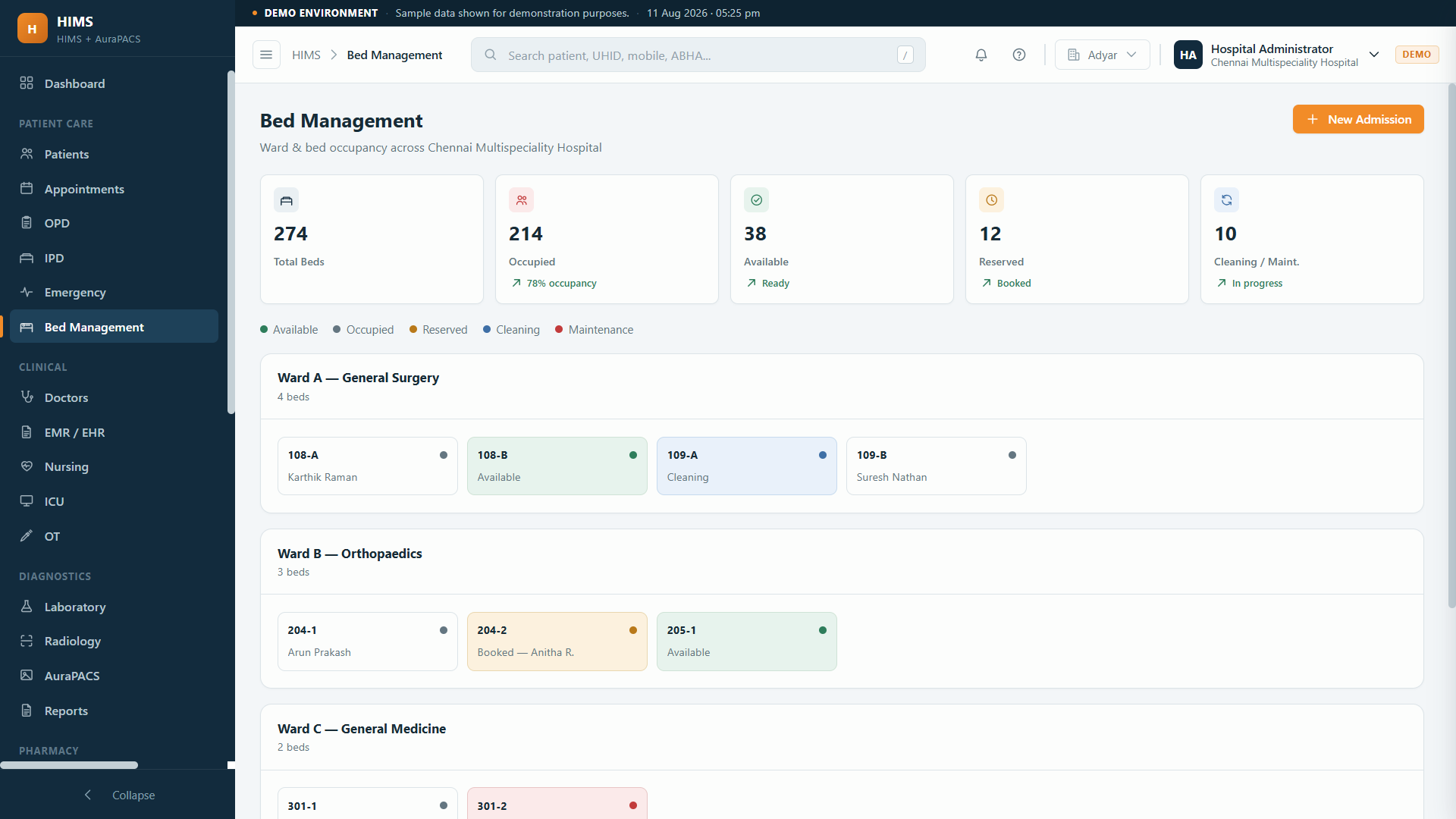
Hospital bed management software keeps one live picture of bed occupancy across the hospital, so that admission, transfer and discharge all update the same board. In HIMS the board is part of the inpatient workflow: a bed is allocated when the admission is raised, moved when the patient is transferred, and released when the discharge is completed, and the free-bed count feeds the hospital dashboard.
The board is organised by ward and bed type, general ward, private room, ICU and so on, so the admissions desk can answer a family or a referring doctor without phoning the ward. Because the bed belongs to an admission, room charges post to the IP bill for the days actually occupied.
Bed occupancy changes every hour. A register updated at the end of a shift is always wrong.
The front desk allots a bed from yesterday's register while the ward filled it from casualty overnight.
A patient moved from ICU to the ward is still shown in ICU, so the ICU looks full and the ward looks empty.
The patient left at noon; the bed is marked free at the evening handover, after a new admission was turned away.
Nobody is sure whether the patient was in the private room for three days or four, so the bill is argued at discharge.
Management asks how many beds are free right now, and the answer is a round of phone calls to each ward.
Admissions desk sees free beds by ward and type on the board.
The bed is tied to the admission and shows as occupied for everyone.
Ward to ICU, or ICU step-down to the ward, moves the patient and both beds update.
Room and bed charges accrue to the IP bill for each bed and day.
Discharge frees the bed, and the dashboard count changes at once.
Workflow: The desk opens the board, sees two private rooms free on the second floor and confirms the admission on the phone.
Result: No call to the ward, no promise that cannot be kept.
Workflow: The intensivist marks the patient fit for the ward; the transfer moves the admission to a ward bed and frees the ICU bed.
Result: The ICU bed is available to casualty within the minute.
Workflow: The final bill is settled and the discharge completes, which releases the bed on the board.
Result: The next admission is allocated the same afternoon.
Workflow: The dashboard shows occupied and free beds by ward alongside OP numbers and collections.
Result: One screen instead of a round of calls.
Many wards, one board.
A handful of beds that must not be double-booked.
Admissions arriving at all hours.
Step-down and step-up moves tracked.
Answer availability without a phone call.
It is part of the HIMS inpatient workflow. Beds are allocated when an admission is raised and released when the discharge completes, so the board stays current without a separate register. See IPD software.
Yes. Wards, room categories and the beds in each are configured to match your building during setup, so the board looks like your hospital rather than a generic layout.
A transfer moves the admission from one bed to another. The old bed becomes free and the new bed becomes occupied in the same action, and room charges change from the date of transfer.
Yes. ICU beds are part of the board and step-up or step-down moves are ordinary transfers. The ICU module also shows live vitals per bed. See ICU management software.
The bed shows as released on the board the moment the discharge completes, so the ward and housekeeping can turn it around before the next admission is allocated. How the ward team coordinates the cleaning itself stays with your process.
Yes. The hospital dashboard in HIMS shows OP, IP, beds and collections together, so occupied and free beds by ward are visible alongside the day's numbers.
Tell us how you work today. We will show you what the platform would look like for you, and give you a clear scope and timeline.
Founder-led · Chennai, India · Built and supported by the person who wrote it