HIMS holds your equipment the way the hospital owns it: a register of every unit, the ward or room it currently sits in, what was serviced and calibrated when, and which units are still under warranty or on a contract.

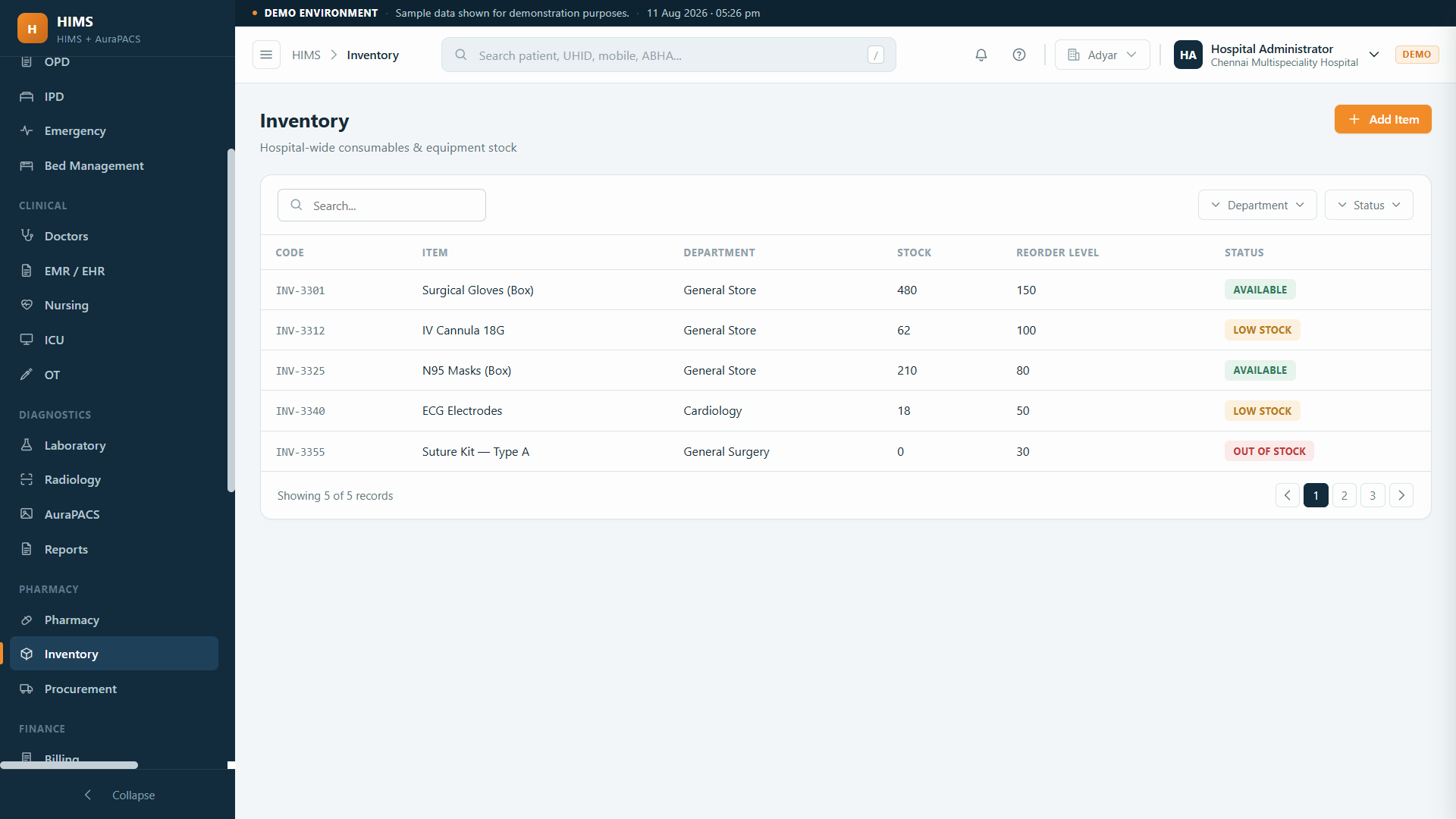
This is the hospital side of equipment. The register belongs to the hospital that owns the monitors, the ventilators, the analysers and the chairs, and it answers the questions a biomedical engineer is asked: what do we own, where is that unit now, when was it last serviced or calibrated, and is it still covered. The equipment sits in the same HIMS inventory that already tracks consumables, so one system covers both what you consume and what you keep.
It is worth being clear about the other side of the same story. If you are the company that sells and services equipment across many hospitals, you are tracking an installed base, not your own ward equipment, and that lives in Aura Business. Read installed base management software for the dealer's view. This page is for the hospital that owns the machine.
Most hospitals know roughly what they own. Roughly is the problem.
A monitor goes from one ward to another during a busy night and the register still says it is where it was bought for.
The engineer's visit report is a sheet in a drawer, so nobody can say what was replaced last time.
Due dates are tracked by whoever has been there longest, and they surface only when an audit asks.
A repair is paid for on a unit that was still covered, because the purchase paperwork was not to hand.
An AMC lapses quietly and the next breakdown is billed as an out-of-contract call.
The unit is added with make, model, identification number and purchase details.
It is assigned to a department, ward or room so the register says where it is.
Warranty period and any service contract are recorded against the unit.
Each attendance, breakdown or preventive visit is logged on the unit's history.
Calibration records and due dates sit with the same unit.
Transfers between departments are recorded, so the history travels with the machine.
Workflow: The register is searched by identification number and returns the department it is currently assigned to.
Result: The hunt around the wards stops.
Workflow: The service history on the unit shows the previous attendance and what was done.
Result: The engineer arrives informed.
Workflow: Warranty and contract status are on the unit before the call is raised.
Result: Cover is claimed while it still applies.
Workflow: Calibration entries and due dates are pulled from the register by department.
Result: The file is already assembled.
A register they maintain rather than reconstruct.
Equipment spread over wards, theatres and labs.
What is owned, where it sits and what is covered.
Analysers and imaging units with calibration to prove.
Equipment records that support NABH-style documentation.
No. This page is the hospital tracking equipment it owns. A dealer tracking units sold and serviced across many hospitals needs installed base management software in Aura Business, which is a different product for a different buyer.
Yes. The HIMS inventory module handles consumables with reorder levels and low-stock alerts, and the equipment register sits alongside it, so stores and biomedical are not two separate systems.
Calibration entries and the next due date are recorded against each unit, so the department can see what is coming rather than discovering it during an audit.
Yes. Your existing spreadsheet is migrated in during setup, which is how most hospitals start. Anything missing from the sheet gets filled in as units are serviced.
Each unit is assigned to a department, ward or room, and transfers are recorded, so the register shows where the machine is now and the service history travels with it.
No. HIMS records what your biomedical team and your suppliers do. The software keeps the register, the history and the cover status. The engineering work stays with your department or the vendor who supplies the unit.
Tell us how you work today. We will show you what the platform would look like for you, and give you a clear scope and timeline.
Founder-led · Chennai, India · Built and supported by the person who wrote it