← Elevate Aura  ·  HIMS & AuraPACS clinical software Chennai, India · WhatsApp
For stores and purchase staff

Hospital procurement software that starts at the ward indent and ends at the stores shelf.

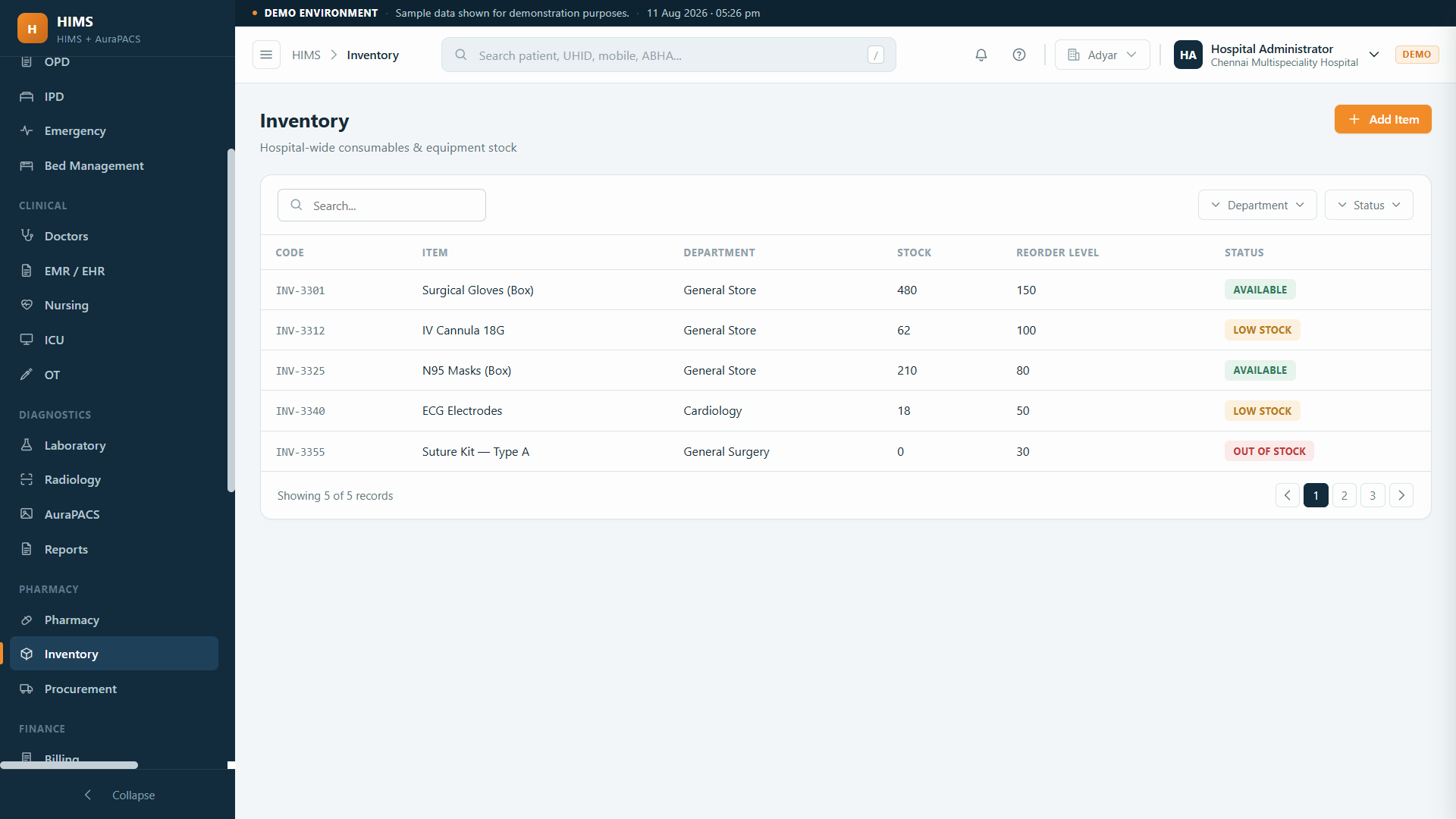
HIMS treats buying as the front end of your inventory. Wards raise indents, reorder levels flag what is running low, orders go out against those needs, and goods received are booked into the same stock the hospital issues from.

Indents raised by wards and departmentsReorder levels that trigger buyingGoods receipt into the same stock
his.elevateaura.co.in/inventory
HIMS stores screen showing consumable items, stock on hand and reorder level
In one sentence

What procurement means in a hospital context

Hospital procurement is the buying side of stores: gloves, sutures, fluids, reagents, linen and every other consumable that a ward, a theatre or a laboratory asks for and then uses up. In HIMS this is not a separate system bolted onto inventory. The stock module already knows what each item is, how much is on hand and the level below which it should be reordered, so buying is simply what happens when that level is crossed or a department raises an indent.

Keeping it in one place is what makes the numbers usable. An item ordered, received and issued follows the same record, so the stores balance reflects goods actually booked in rather than a purchase file that somebody reconciles later. Equipment is tracked in the same module, which is why the biomedical register and the consumables shelf are not two different databases.
How hospital buying goes wrong

Stores usually find out too late and buy too much.

Purchasing is reactive in most hospitals because nothing tells anyone in advance.

Indents on scraps of paper

A ward sister writes what she needs on a sheet, it goes to stores, and nobody can say later who asked for what.

Stockouts discovered at the bed

The shortage is found when an item is needed, not when it fell below a sensible level.

Panic buying at a premium

Because the shortfall is urgent, the purchase is made from whoever can deliver today.

Goods received without checking

A delivery is accepted and stacked, and the difference between what was ordered and what came is found a month later.

Expiry noticed on the shelf

Over-ordering leaves batches that quietly reach their expiry date in the store room.

One consumable, one cycle

From the ward asking to the shelf being filled.

01

Indent raised

A ward, theatre or laboratory asks stores for what it needs, on the system.

→
02

Reorder level checked

Items already below their reorder level are flagged for buying.

→
03

Order placed

A purchase order goes to the supplier against the items and quantities agreed.

→
04

Goods received

The delivery is booked in against the order, with batch and expiry where it applies.

→
05

Stock updated

Stores balance rises and the item becomes issuable to departments.

→
06

Issued and consumed

Issues to wards, theatre and the pharmacy drop the balance again.

What is covered

Buying, receiving and issuing on one stock record.

📋Demand

  • Indents from wards and departments
  • Reorder levels per item
  • Low-stock alerts
  • Consumption visible by department

🛒Buying

  • Purchase orders against indents and reorder needs
  • Item, quantity and supplier on the order
  • Orders open until received
  • Order history per item

📦Receiving

  • Goods receipt booked against the order
  • Batch and expiry where the item carries them
  • Short and excess deliveries visible
  • Stock updated on receipt

🛠Alongside

  • Equipment register in the same module
  • Pharmacy stock with its own dispensing flow
  • Issues to wards, theatre and laboratory
  • Expiry alerts before the date passes

See hospital inventory management →

In practice

Four things stores stop doing by hand.

The weekly ward indent

Workflow: Each ward raises its indent on the system and stores works from one consolidated list.

Result: No sheets, and a record of who asked.

An item drifting low

Workflow: The reorder level flags it days before the shelf empties and it goes on the next order.

Result: Urgent buying becomes rare.

A short delivery

Workflow: Goods receipt is booked against the order and the shortfall shows as still outstanding.

Result: The difference is raised while the invoice is fresh.

A theatre case

Workflow: Consumables issued to the case drop stores stock and reach the patient's bill.

Result: Usage and billing come from one movement.

Who it is for

Anyone who answers for the store room.

📦
Stores in-charge

Indents, orders and receipts in one place.

🏥
Multi-specialty hospitals

Several departments consuming from one store.

🏞
Nursing homes

Small stores run without a purchase department.

🔬
Laboratories

Reagents with batch and expiry to watch.

📊
Administrators

What is being consumed, by which department.

The honest comparison

Three ways hospitals buy consumables.

 
Paper registers and Excel
Enterprise hospital ERP
HIMS by Elevate Aura
How a need is raised
A sheet from the ward
A workflow with approvals
An indent on the system, with reorder alerts
When a shortage is known
When it runs out
In a nightly report
When the item crosses its reorder level
Goods receipt
Delivery note filed
Booked against the PO
Booked against the order, with batch and expiry
Link to what is used
None
Through interfaces
The same stock the wards issue from
What it takes to run
One diligent person
A purchase department
Stores staff on the screen they already use
Questions

Hospital procurement, answered.

Is procurement a separate module from inventory?

No. Buying in HIMS is the front end of the inventory module, which is why an order, a receipt and an issue all move the same stock figure. See hospital inventory management for the stock side.

Does it include a supplier payables ledger?

Procurement in HIMS covers the movement of goods: indents, orders, receipt and stock. A full supplier payables and accounting ledger is not what this module is for. If you need that depth, say so on the call so it is scoped honestly.

Can wards raise their own indents?

That is how it is set up: departments raise indents on the system rather than sending sheets to stores, so the request carries the department, the item and the quantity, and stores works from a consolidated list. How far you take the buying workflow is agreed when we scope your stores.

How do reorder levels work?

Each item carries a level below which it should be reordered. When stock crosses it, the item is flagged in the low-stock view so buying is triggered by the balance rather than by someone noticing an empty shelf.

Does pharmacy stock come through the same process?

Pharmacy has its own dispensing queue and stock with batch and expiry tracking, and it sits in the same platform. See pharmacy management for how drugs are handled specifically.

We already run purchase in a spreadsheet. Can it be moved?

Yes. Your item list, suppliers and opening balances are migrated in during setup, which is the normal starting point. From then on the sheet stops being the source of truth.

Keep exploring

Related HIMS pages

Let's talk about your requirement.

Tell us how you work today. We will show you what the platform would look like for you, and give you a clear scope and timeline.

Founder-led · Chennai, India · Built and supported by the person who wrote it