An ayurveda centre schedules therapy rooms and therapists for weeks at a time, prepares and dispenses its own medicines, and bills a whole course rather than a consultation. HIMS is set up around those three things.

An ayurveda hospital is not a series of consultations. A patient is assessed, prescribed a course that runs for a fixed number of days, and then attends or stays for therapies that are booked into rooms with named therapists. The scarce resources are the therapy room and the therapist's hands, not the doctor's diary, and the money is agreed as one price for the course before anything begins.
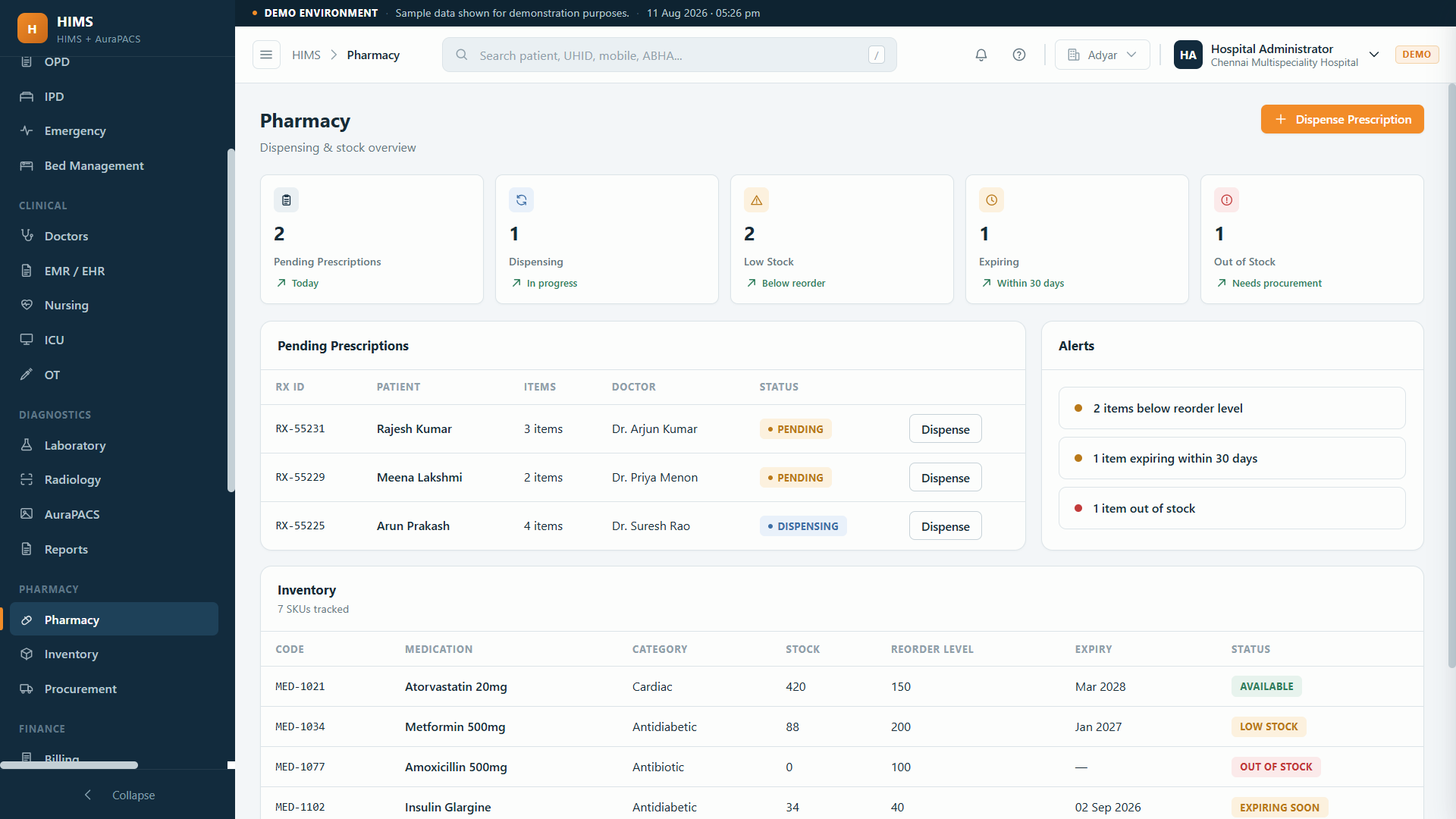
HIMS is configured for that shape. Rooms and beds are allocated for a residential stay, therapy appointments are scheduled across the days of the course, the in-house dispensary is run as pharmacy stock dispensed against the patient, and the course is billed as a package with anything extra shown separately. Medicines you prepare yourself are held and issued as stock items. HIMS is not a production system, so if you need preparation batches recorded, say so on the call and it is scoped.
Scheduling weeks of therapy on paper is where an ayurveda centre loses money and time.
Two therapies want the same room at the same hour, and the clash is discovered when the patient is already changed.
Who is free at eleven is settled in the corridor, not on a schedule anyone can see.
A fourteen-day course misses two days and nobody can say which therapies are still owed.
Medicines prepared in-house are handed over without leaving a record, so stock is counted by looking at the shelf.
The course price was agreed, and the medicines, the room upgrade and the extra therapy were not.
The patient is registered under a UHID and the assessment is recorded on the record.
The therapies and the number of days are agreed and raised as a package against the patient.
A residential patient is allocated a room from the bed board for the length of the stay.
Therapies are booked into therapy rooms with therapists across the days of the course.
Attendance and a note are recorded against the session on the same record.
Medicines are issued from the in-house dispensary against the patient and come off stock.
The course closes with the therapies delivered on the record and the package settled, extras itemised.
Workflow: The room is held for the stay and every therapy is placed on the schedule at the start.
Result: The centre knows its capacity three weeks ahead.
Workflow: Bookings are made against the room and the therapist, so a clash cannot be created.
Result: Nobody is kept waiting while a room is found.
Workflow: The therapies delivered and the therapies owed are both on the course record.
Result: The missed sessions are rescheduled rather than forgotten.
Workflow: Preparations are issued against the patient and come off stock as they go out.
Result: The shelf count and the record agree.
Workflow: The package is settled with the room, medicines and any extra therapy shown as separate lines.
Result: The patient sees what the agreed price did and did not include.
Residential courses with wards and rooms.
Therapy rooms booked all day.
Consultation and an in-house dispensary.
Stays, schedules and package pricing.
An ayurveda wing on the same record.
No. HIMS is a general hospital system configured for the way an ayurveda centre works, which is treatment courses over days, therapy rooms and therapist time as the scarce resource, and an in-house dispensary. Anything specialty-specific is scoped on the call.
Yes. Therapies are booked into a room with a named therapist from the roster, so the day's schedule is visible and a clash cannot be created. The room board also holds residential rooms for the length of a stay.
In-house preparations are held as stock items in the pharmacy module, dispensed against the patient and tracked with reorder and expiry alerts. HIMS is not a production system, so recording preparation batches is scoped on the call.
As a package raised against the patient, with the room, medicines and any additional therapy shown as separate lines. See hospital package billing software.
Yes. A residential patient is admitted to a room from the bed board, while a daily patient attends booked therapy slots. Both sit on the same patient record and the same billing.
HIMS is deployed in the cloud and used from a browser. Setup and training are done by the founder who built it, remotely outside Chennai, with your patient list brought in from Excel and support on WhatsApp afterwards.
Tell us how you work today. We will show you what the platform would look like for you, and give you a clear scope and timeline.
Founder-led · Chennai, India · Built and supported by the person who wrote it