Small children are seen often, weighed every time and due for something on a schedule. HIMS keeps one record per child from the first visit, records the weight on each visit, holds immunisation due dates as appointments, and sends reminders to the parent.

A paediatric clinic has three habits that general clinic software tends to ignore. Children in the first years are seen many times in a short period, so the record fills up quickly and has to be readable at a glance. The weight taken at the desk matters at the moment of prescribing, so it needs to be on the visit rather than on a slip. And a large share of visits are not illnesses at all but due dates, which means the clinic has to know who is due and who did not come.
HIMS handles all three with parts it already has. One UHID per child carries every visit, with the weight and other observations recorded against the visit and visible to the doctor writing the e-prescription. Immunisation and review due dates are held as booked appointments with WhatsApp reminders, so the follow-up list is a list, not a memory. The contact details on the record are the parent's, which is how the clinic reaches the patient.
Paediatric practice is repeat work, and repeat work is exactly what paper handles worst.
It is taken at the desk, written on paper and read out in the consulting room, and nothing keeps it.
The only record of what has been given is in the parent's bag, so the clinic cannot tell who is overdue.
Reminders depend on somebody flipping through a register in the evening, which does not happen in a busy week.
One family, two or three children, and nothing at the desk connects them.
After twenty visits in two years, the file is thick and the relevant note is somewhere in the middle.
The child gets a UHID; the parent's name and phone number sit on the record as the contact.
Weight and other observations are recorded on the visit before the child goes in.
The doctor opens the visit with the weight already on it, records notes and raises an e-prescription.
The next immunisation or review is booked as an appointment before the family leaves.
A WhatsApp reminder goes to the parent ahead of the date, with templates agreed at setup.
The appointment list shows missed due dates so the desk can call.
Workflow: The desk records the weight on the visit, and it is on screen when the doctor prescribes.
Result: The figure the doctor prescribes against is recorded, not recalled.
Workflow: Immunisation due dates are booked as appointments on the child's record rather than written on a card.
Result: The clinic knows who is due even if the card is lost.
Workflow: Missed appointments show on the list, and the desk sends a WhatsApp reminder to the parent.
Result: Follow-up becomes a task somebody can finish.
Workflow: A search on the parent's phone number brings up every child registered against it.
Result: The desk finds the right record in seconds.
One or more paediatricians, high visit frequency.
Due dates and recall as the core of the work.
A paediatric wing inside a larger hospital.
Paediatrics alongside other consultants.
Cloud setup and WhatsApp support, no local IT.
No. HIMS is a general hospital system configured for the way a paediatric clinic works, which is frequent visits, weight recorded at every visit and schedules of due dates. It is not sold as a specialty product, and anything specialty-specific would be scoped on the call.
HIMS records rather than calculates. The weight is captured on the visit and shown to the doctor writing the e-prescription, and what was prescribed is kept on the record. Dose decisions stay with the clinician.
Due dates are booked as appointments on the child's record, with WhatsApp reminders before the date and a list of missed appointments afterwards. The schedule your clinic follows is set up at configuration.
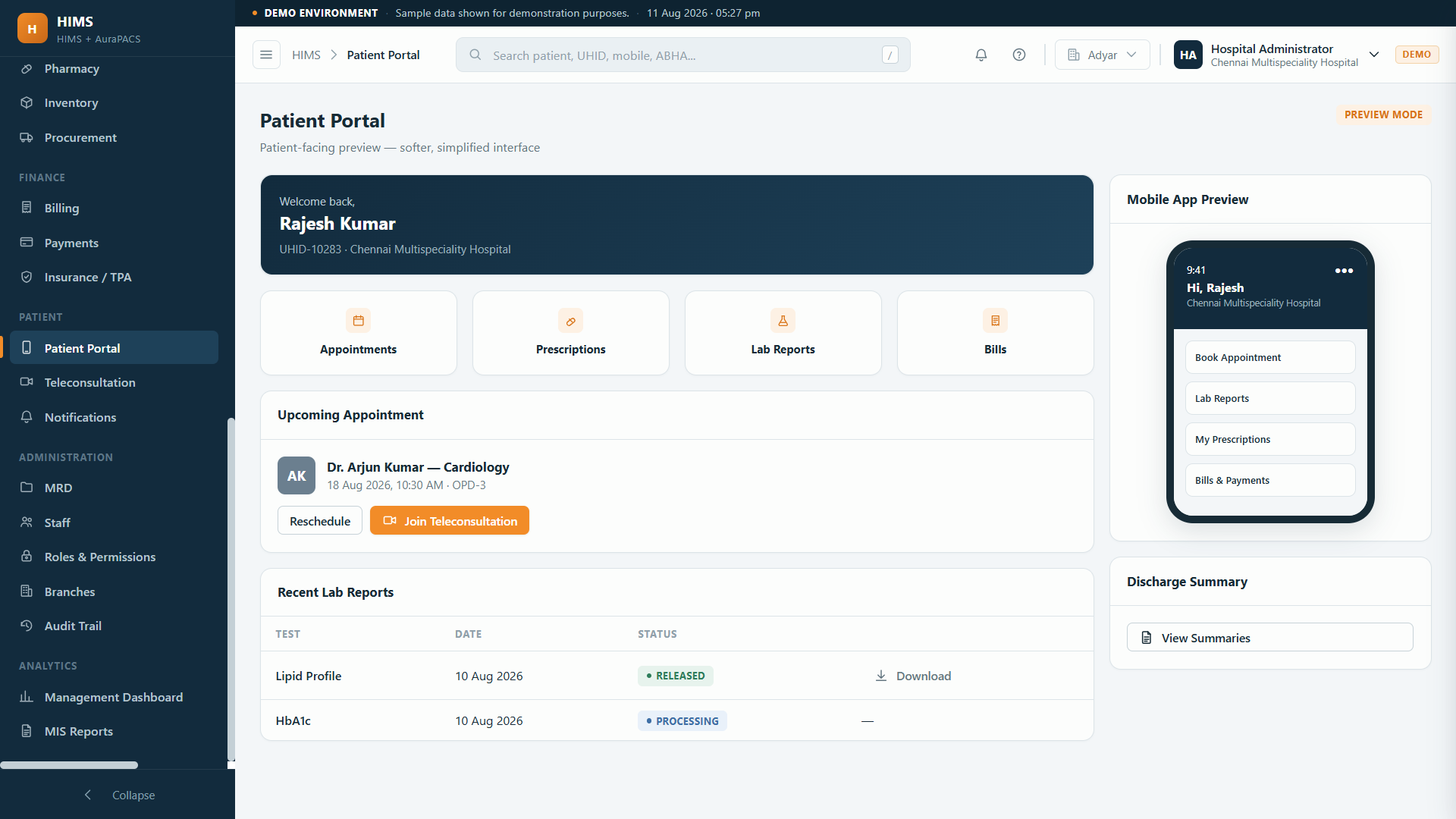
The patient app and portal are used by the parent, who can see upcoming appointments and reports. Prescriptions and reports can also be shared to their phone.
Yes. Registration searches by phone number before creating a patient, so siblings registered against the same parent contact come up together and duplicate records are avoided.
It is the same platform with the modules a clinic uses switched on. If you later add beds, a laboratory or imaging, they run on the same record rather than needing a migration.
Tell us how you work today. We will show you what the platform would look like for you, and give you a clear scope and timeline.
Founder-led · Chennai, India · Built and supported by the person who wrote it