HIMS lets a doctor prescribe from inside the consultation, choosing from the drugs the pharmacy actually holds. The prescription attaches to the patient record and appears in the dispensing queue, so nothing is read off handwriting.

e-Prescription in HIMS means the doctor writes the drug order in the patient record during the consultation rather than on a pad. The drug is picked from a list drawn from the hospital pharmacy's own stock, with dose, frequency and duration recorded as fields. The prescription then sits on the encounter alongside the history, the examination and the investigations ordered at the same visit.
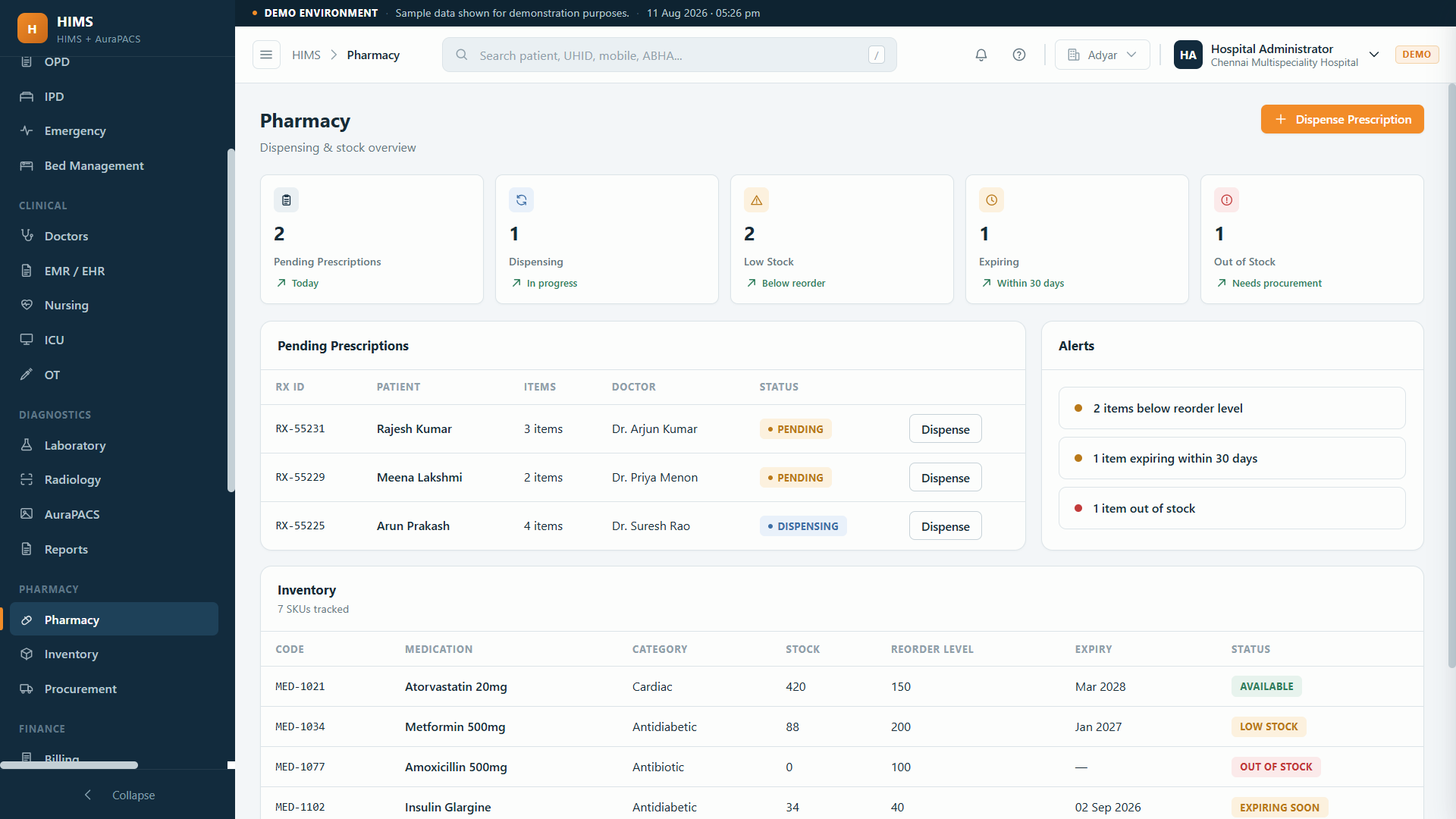
From there it moves by itself. The pharmacy sees the prescription in the dispensing queue, dispenses against what was typed and the issue drops the stock it came from. In the ward, the same order is what nursing works from when a dose is due. Nothing is transcribed at any point, which is where most prescription errors and most billing mismatches actually come from.
None of this needs the doctor to change how they consult. The prescription is written where the notes are already being written, and the rest of the movement, to the counter, to the ward and on to the bill, happens because every department is reading the same record.
The pad works fine for the doctor. Everyone downstream is guessing.
The pharmacist reads a slip, decides what was meant, and dispenses a reasonable guess.
The patient walks to the counter and is told the item is not available, then walks back up.
The only copy of what was prescribed leaves the building with the patient.
At the follow-up nobody can see what was given last month or whether it was finished.
What was dispensed at the counter and what appears on the bill are reconciled by hand at the end of the day.
The doctor opens the patient's record and prescribes without leaving it.
The drug list comes from what the pharmacy holds, so the item exists.
Strength, frequency and duration are captured as fields, not free text.
The prescription stays on the encounter and on the patient's history.
The pharmacy sees it in the dispensing queue as the patient walks down.
The issue drops stock and the item reaches the bill without retyping.
Workflow: The doctor prescribes as the consultation ends and the pharmacy has the queue entry before the patient reaches the counter.
Result: The counter queue moves without a reading delay.
Workflow: The item shows as unavailable while the doctor is still prescribing, so an alternative is chosen in the room.
Result: The patient is not sent back upstairs.
Workflow: The doctor opens the record and sees exactly what was prescribed and for how long.
Result: The next decision is made on evidence.
Workflow: The prescription on the record is what the ward works from and what the pharmacy issues against the admission.
Result: The bill matches what was actually given.
A script that survives the walk to the counter.
OP prescribing with history on every repeat visit.
Dispense against text, not handwriting.
One prescribing standard across departments.
Ward doses worked from the written order.
From the drugs the pharmacy holds. That is what stops a prescription being written for an item the counter cannot supply, and it is why the dispensing queue and the stock ledger agree afterwards.
Yes. The prescription is printed from the record when the patient is buying outside, and it is also visible in the patient portal. The printed copy and the stored copy are the same document.
Yes. Clinics and polyclinics use the same consultation and prescribing flow without the IP modules. See clinic management software for the smaller setup.
It appears in the dispensing queue against the patient, so the counter works from a list rather than from slips carried down by patients. Dispensing drops stock from the batch it was issued from.
Prescriptions are recorded with the prescriber, the patient and the time, and pharmacy issues are tracked by batch, which is the record side. Any regulatory register your state requires should be discussed on the call so it is scoped correctly.
Yes. The prescription is one of the things written on the clinical record, alongside history, orders and notes. See hospital EMR software for the record as a whole.
Tell us how you work today. We will show you what the platform would look like for you, and give you a clear scope and timeline.
Founder-led · Chennai, India · Built and supported by the person who wrote it