HIMS gives every patient a structured electronic medical record: history, examination, orders, progress notes, lab and imaging reports and e-prescriptions, written once and read in OP, the ward, the pharmacy and the reporting room.
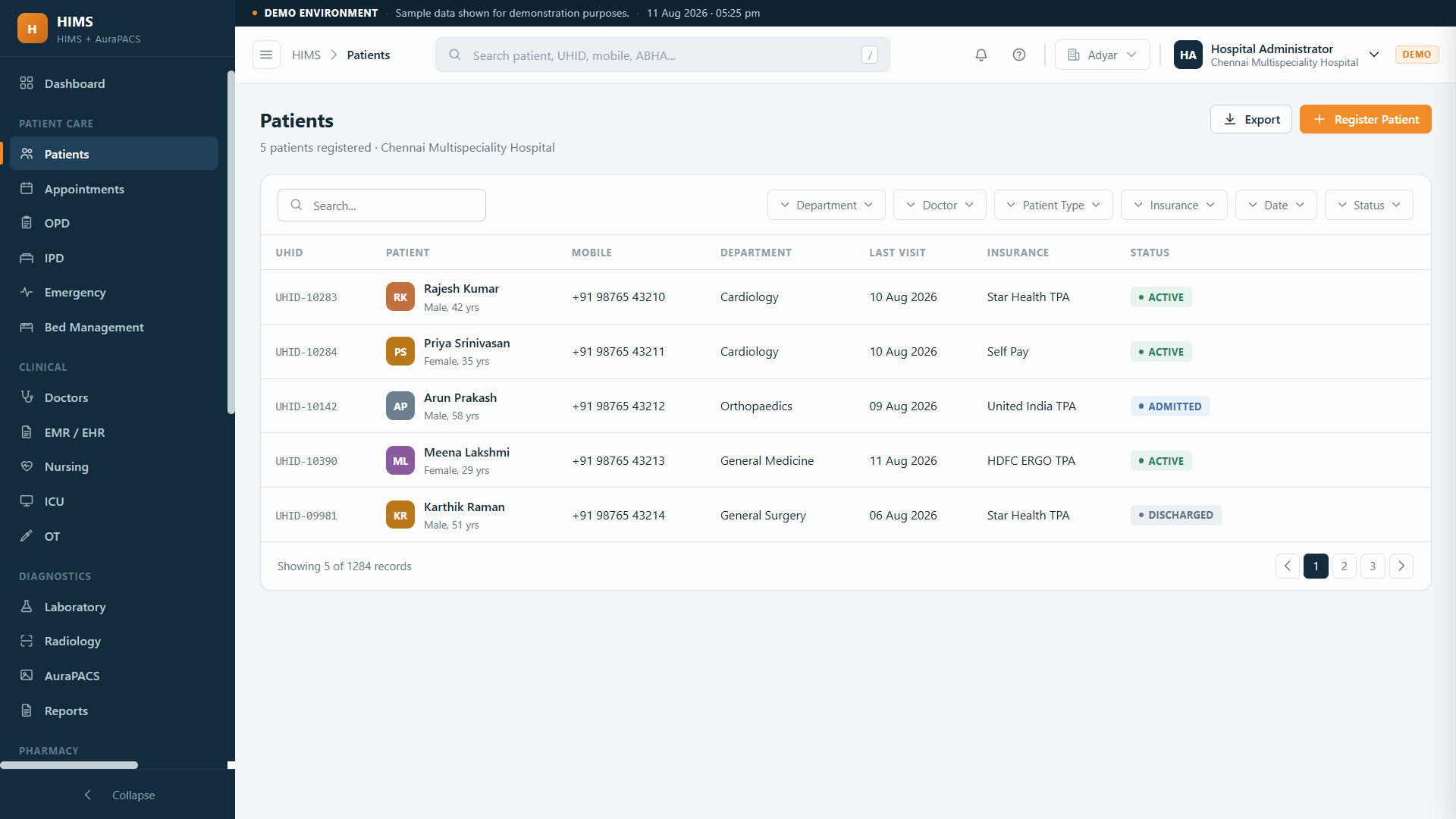
Hospital EMR software is the clinical half of a hospital information system: the place where a doctor records history and findings, raises orders, writes progress notes and issues prescriptions against a single patient record. In HIMS the EMR is not a bolt-on. It is the same record that registration created, that the lab and pharmacy read, and that billing draws charges from.
The record is structured rather than free text. History, examination, diagnosis, orders, notes and reports each sit in their own place, which is what allows the EMR to support NABH-style documentation and lets a nurse on the ward see exactly what the OP doctor ordered that morning. Imaging studies and radiology reports arrive on the same record through AuraPACS.
Most hospitals already document well. The problem is where the documentation ends up.
The OP note is in a case sheet, the admission note in a file, the lab report on a printout. The patient explains everything again on the ward.
A handwritten investigation order is carried to the lab by a relative, and nobody knows if the sample was collected.
The pharmacy interprets handwriting, and the dispensed drug does not always match what the doctor intended.
When a quality audit asks for complete documentation on a set of admissions, someone spends days pulling case sheets.
The summary is written on the last day from whatever the file contains, missing the investigations that were done elsewhere.
UHID created at OP or IP registration, demographics captured once.
Doctor records complaints, history and findings in structured fields.
Lab, imaging and drug orders go straight to LIMS, AuraPACS and the pharmacy queue.
Verified lab results and radiology reports attach to the same encounter.
Progress notes, nursing entries and the e-prescription accumulate on the record.
The discharge summary is prepared from what the record already holds.
Workflow: The doctor opens the UHID and sees last month's notes, the drugs prescribed and the lab values before the patient sits down.
Result: The consultation starts from the record, not from a retelling.
Workflow: The order lands in the laboratory worklist; the result comes back verified and appears on the same encounter.
Result: No printouts carried between counters.
Workflow: The consultant reads the nursing chart and overnight notes on the record and adds today's orders.
Result: Nursing acts on written orders, not recalled ones.
Workflow: The quality team pulls the admissions for the period and checks each record against the documentation standard.
Result: The file is already assembled.
Records shared across departments and shifts.
IP-led facilities that need clean admission-to-discharge notes.
OP records with e-prescription and follow-up history.
Doctors who want their notes readable across the hospital.
Coordinators preparing NABH-style documentation.
No. The EMR is a module of HIMS and shares the patient record with registration, the pharmacy, the laboratory, inventory and billing. See the hospital management system page for the whole platform.
The EMR is structured to support NABH-style documentation: history, examination, orders, notes, consent and discharge summary each have their place on the record. Accreditation itself is assessed by the accrediting body against your hospital's processes, not by the software.
Yes. The prescription is written in the EMR and appears in the pharmacy dispensing queue, so the pharmacist dispenses against what the doctor typed rather than against handwriting.
Imaging is handled by AuraPACS, which is built into HIMS. Studies land from the machine, the radiologist reports in the browser viewer, and the images and report sit on the patient's record. See hospital PACS software.
HIMS is built to support ABHA linking and ABDM-aligned workflows. Read what ABHA and ABDM ready means before comparing vendors.
Yes. Many hospitals begin with OP registration, EMR and e-prescription and add IP, pharmacy and lab later. The record structure is the same, so nothing has to be migrated when the next module is switched on.
Tell us how you work today. We will show you what the platform would look like for you, and give you a clear scope and timeline.
Founder-led · Chennai, India · Built and supported by the person who wrote it