HIMS schedules every case by theatre, surgeon, procedure and status, keeps pre-operative documentation on the patient's record, draws consumables and implants from inventory as they are used, and posts OT charges straight to the inpatient bill.
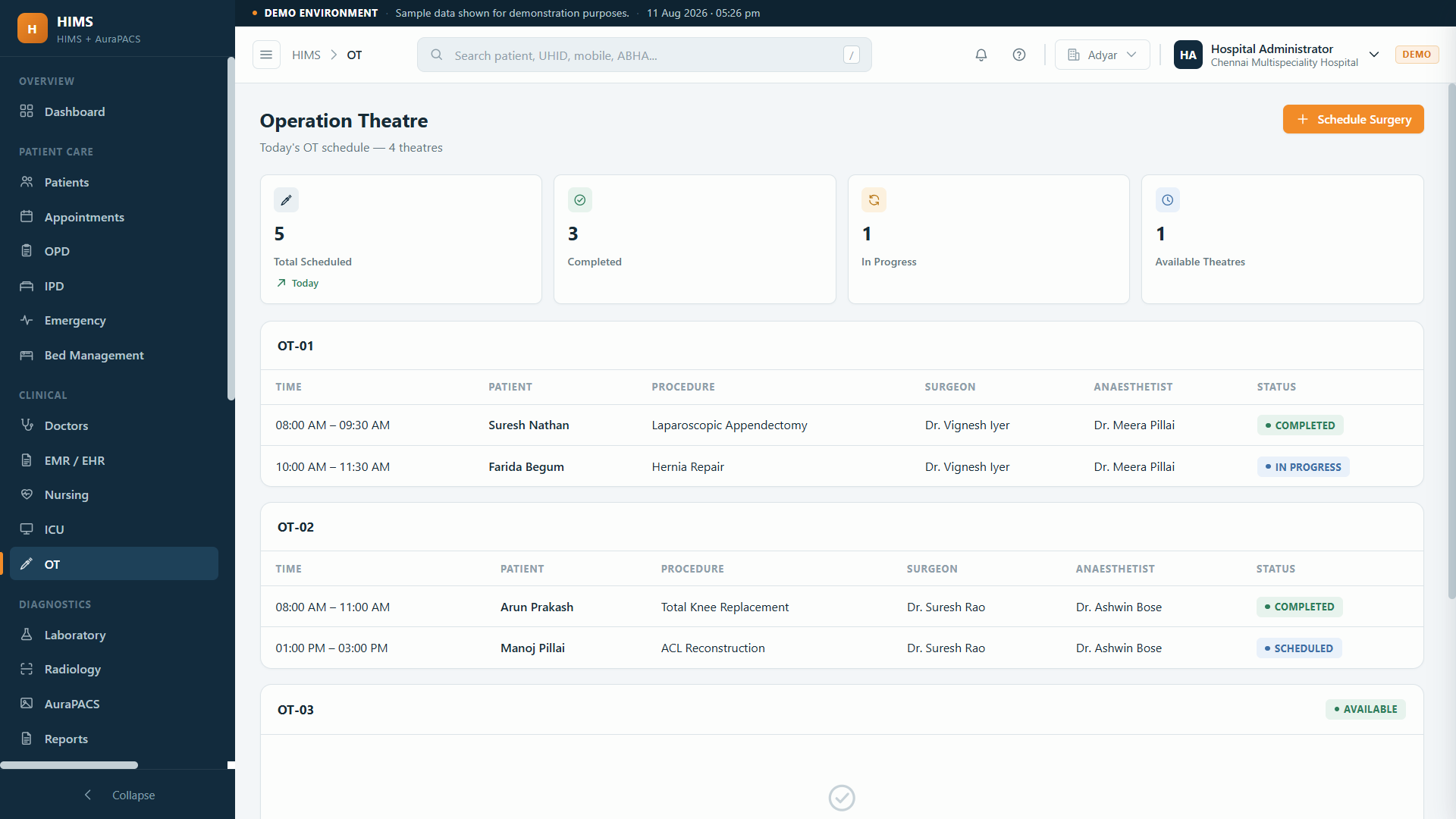
Operation theatre management software keeps the OT list, the case documentation, the consumables and the charges for every surgery in one place. In HIMS a case is scheduled against a theatre, a surgeon, a procedure and a time, and its status moves from planned to in progress to completed so the ward, the surgeon and the front desk see the same list.
The case belongs to the admission. Pre-operative notes and consent are recorded on the patient's EMR, the implants and consumables used are issued from inventory against the case, and the OT charges, surgeon fees and anaesthesia post to the running IP bill. When the patient returns to the ward, nothing about the surgery has to be reconstructed for the discharge summary or the TPA claim.
The OT list is usually right. What happens around it is where the leakage is.
The ward, the anaesthetist and the billing desk each phone the OT to ask whether the case has started.
A plate and six screws go into the patient; the box is in the bin and the charge is nowhere.
The documentation exists, but it is not on the record when the TPA asks for it.
The assistant surgeon and the anaesthetist are billed at discharge from whoever remembers the case.
Nobody can say how many cases each theatre ran last month, or which surgeon over-ran their slot.
Theatre, surgeon, procedure, anaesthetist and time booked against the admission.
Assessment, consent and pre-op orders recorded on the EMR.
Status updated as the case starts; the ward and front desk see it.
Implants, disposables and drugs drawn from OT stock against the case.
Operative notes on the record; case marked done.
OT time, surgeon and anaesthesia fees and consumables land on the IP bill.
Workflow: The OT in-charge books four cases across two theatres; the surgeons, the ward and the anaesthetist see the same list that evening.
Result: No phone calls to confirm the order.
Workflow: The implant is issued from OT stock against the case and appears as a line on the IP bill at cost the hospital has set.
Result: The charge and the stock movement happen together.
Workflow: The package covers the procedure; the extra consumables are itemised separately so the claim and the patient's share are clear.
Result: No dispute about what the package included.
Workflow: Casualty admits, the case is added to the OT list and the theatre status shows it running.
Result: The morning list is adjusted around it.
Several theatres, several surgical departments.
High case volume, short stays.
One theatre, one list, no missed charge.
Their list and their notes, on the record.
Implants tracked from shelf to bill.
Yes. Every case is scheduled against an IP admission, so the patient's record, bed, orders and running bill are already there. See hospital IPD software for the admission side.
They are issued from the OT store against the case. The stock reduces and the item appears on the IP bill in the same action, so a used implant cannot go unbilled. Stock and reorder levels are handled by the inventory module.
Pre-operative assessment, consent and orders are recorded on the patient's EMR against the case. If your hospital follows a specific checklist format, describe it on the call and it is configured with the project.
Yes. A case moves from planned to in progress to completed, and the OT list is visible to the ward, the front desk and the surgeons, so nobody needs to phone the theatre.
A package case is billed at the package rate with extras itemised separately, and the operative notes and consent are on the record for the claim. See TPA and insurance billing.
Yes. Theatres are configured during setup and each has its own list. Cases per theatre and per surgeon are visible for planning and for management review.
Tell us how you work today. We will show you what the platform would look like for you, and give you a clear scope and timeline.
Founder-led · Chennai, India · Built and supported by the person who wrote it