A maternity hospital plans almost everything. Antenatal visits build one record over months, the admission date is known, the stay is billed as a package, and the baby arrives as a second record linked to the mother. HIMS is set up for that shape of work.

Maternity is the most predictable inpatient work a hospital does. The patient is known months before she is admitted, she is seen repeatedly during that time, the admission has an expected date, the stay has an expected length, and the charge is usually agreed as a package rather than counted item by item at the end. Hospital software for maternity is therefore less about emergency capacity and more about holding one long record and billing a stay that was priced before it started.
HIMS handles this with the same parts it uses everywhere: one UHID that carries every antenatal visit, appointments that book the next review before the patient leaves, bed and theatre scheduling for the admission, package billing for the stay, and a second patient record for the newborn linked to the mother's. The newborn is described here as a linked record, because that is what it is. There is no separate neonatal module on record, and anything beyond a linked record is scoped on the call.
Maternity work spans months, and paper does not span months well.
If she forgets it, the hospital has no history, and the visit starts from nothing.
What is inside the package and what is extra was explained once, verbally, and nobody wrote it against the case.
A scan or a review due in three weeks depends on the patient remembering, and there is no list of who did not come.
Observations and feeds are written on the mother's sheet, so the newborn has nothing to be discharged with.
Discharge is the moment the TPA paperwork starts, and the family is already packed.
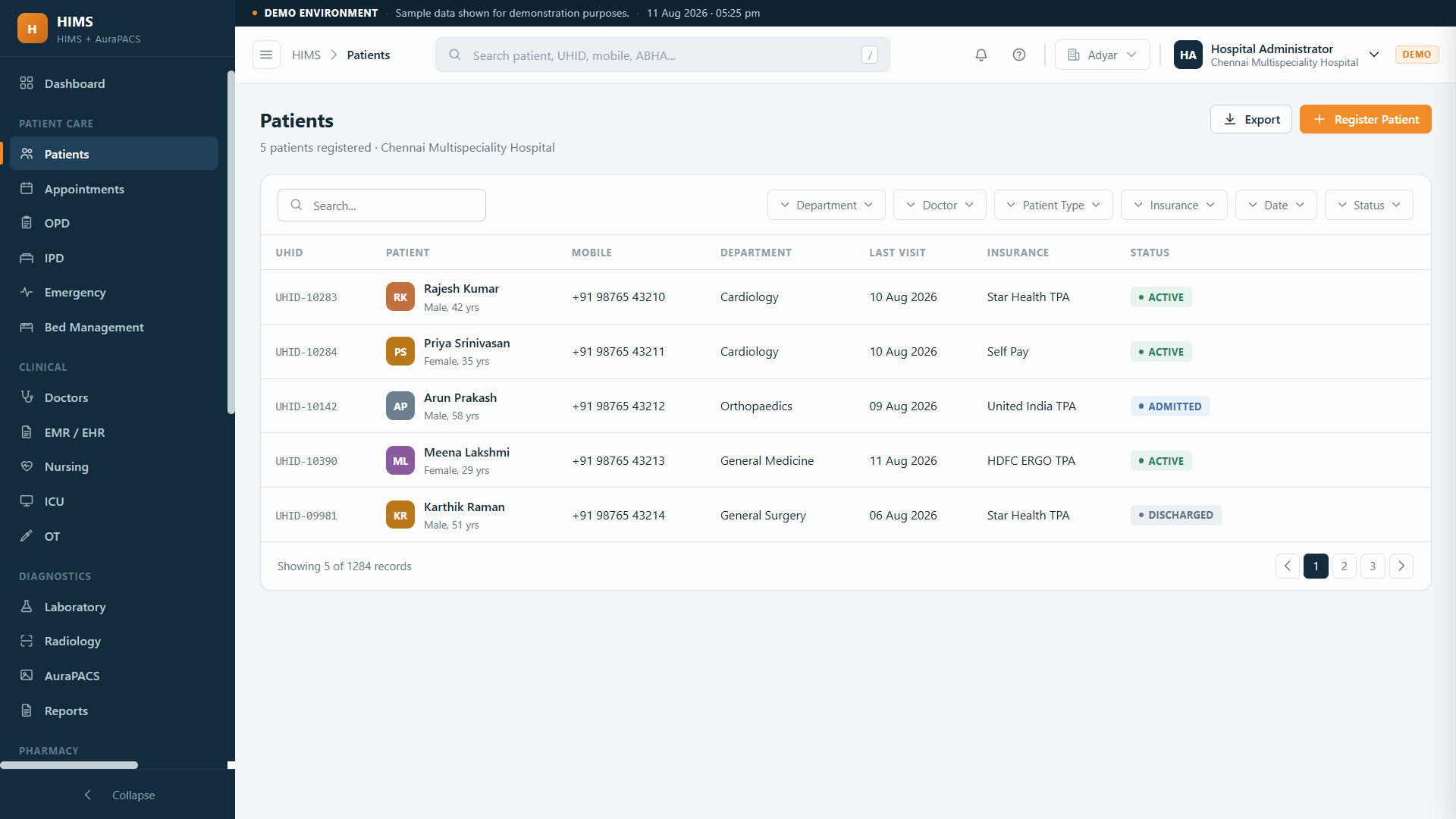
The mother is registered under a UHID; the visit, investigations and notes attach to it.
Each review adds to the same record, with the next appointment booked before she leaves and a WhatsApp reminder set.
The expected date is on the appointment list, the bed is allocated and the package and payer are recorded at admission.
A planned procedure is scheduled on the theatre list; an unplanned one is added on the day.
The baby is registered as a patient in their own right and linked to the mother's record.
Nursing notes, drugs issued from the pharmacy and anything outside the package accrue on the bill.
Two summaries, one bill settled against the package, insurance or TPA documents pulled from the record.
Workflow: The desk opens her record by phone number and the consultant reads every previous visit.
Result: The visit goes ahead as normal.
Workflow: The appointment list shows reviews due and reviews missed, and the desk calls or sends a WhatsApp reminder.
Result: Antenatal follow-up stops depending on memory.
Workflow: Mother and baby each get a summary from their own record, with the bill settled once.
Result: The newborn leaves with a record of their own.
Antenatal outpatients with wards and a theatre.
Short planned stays and package pricing.
Outpatient work that becomes an admission.
A few beds, one theatre, one billing desk.
Seeing patients and running the hospital.
HIMS is a general hospital system configured for the way a maternity hospital works, which is long planned stays, months of antenatal visits on one record and package billing. It is not sold as a specialty product, and anything specialty-specific is scoped on the call rather than claimed here.
The newborn is registered as a patient with their own record, linked to the mother's admission, so notes and a discharge summary belong to the baby. This is a linked record rather than a neonatal module, and further requirements are discussed during scoping.
Yes. The package sits on the admission and anything provided outside it is billed separately and visibly. See hospital package billing software for how packages and extras are handled.
Yes. Every visit attaches to one UHID, so a consultant opening the record sees the whole sequence of visits, investigations and prescriptions rather than the most recent one.
Yes. Pre-authorisation is recorded at admission and claim documents come from the record at discharge. See TPA billing software.
Yes. The patient app and portal show upcoming appointments and reports, and reminders for reviews can go out on WhatsApp with templates agreed at setup.
Tell us how you work today. We will show you what the platform would look like for you, and give you a clear scope and timeline.
Founder-led · Chennai, India · Built and supported by the person who wrote it